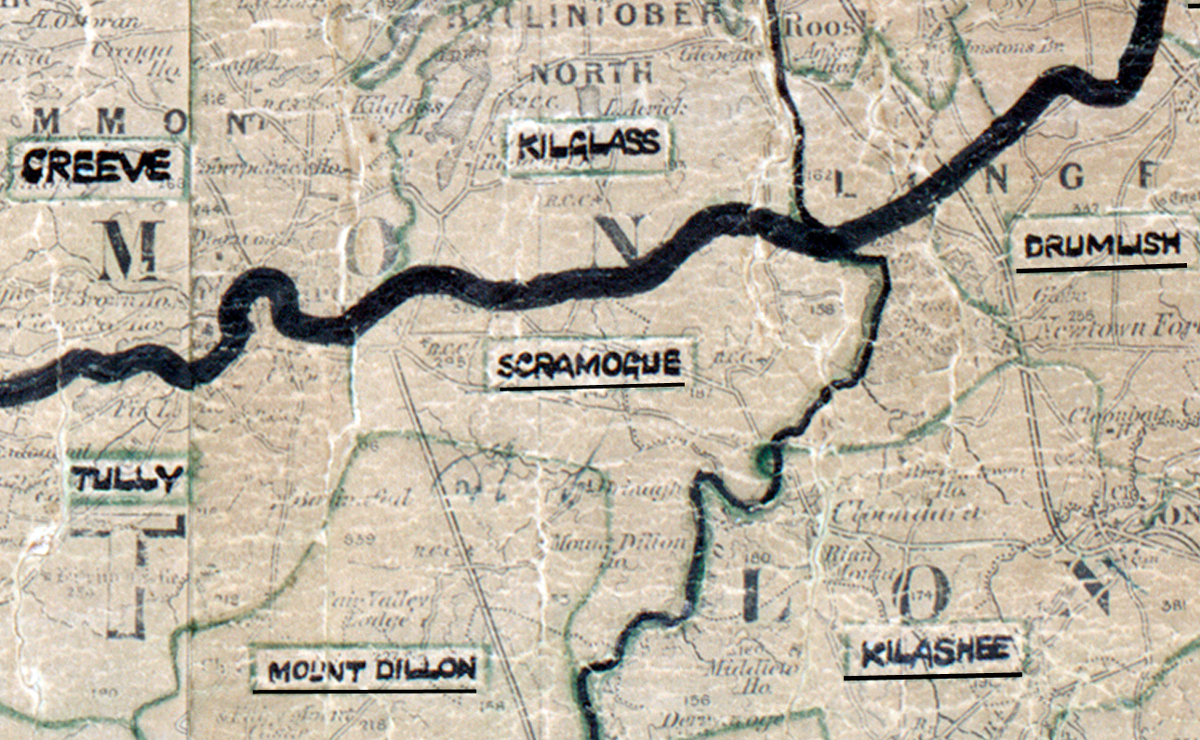
 Area: Scramogue
Started: September 1954
Finished: April 1955
Poles used: 709
Line used (km): 64
Premises connected: 266
The figures above were sourced from our REO News magazine, to learn more about what these figures mean, visit our interactive map. The map above shows the area boundary and is from a digitised version of the original map used during the scheme.
Flooding caused some problems in Scramogue according to The REO News from July 1955.
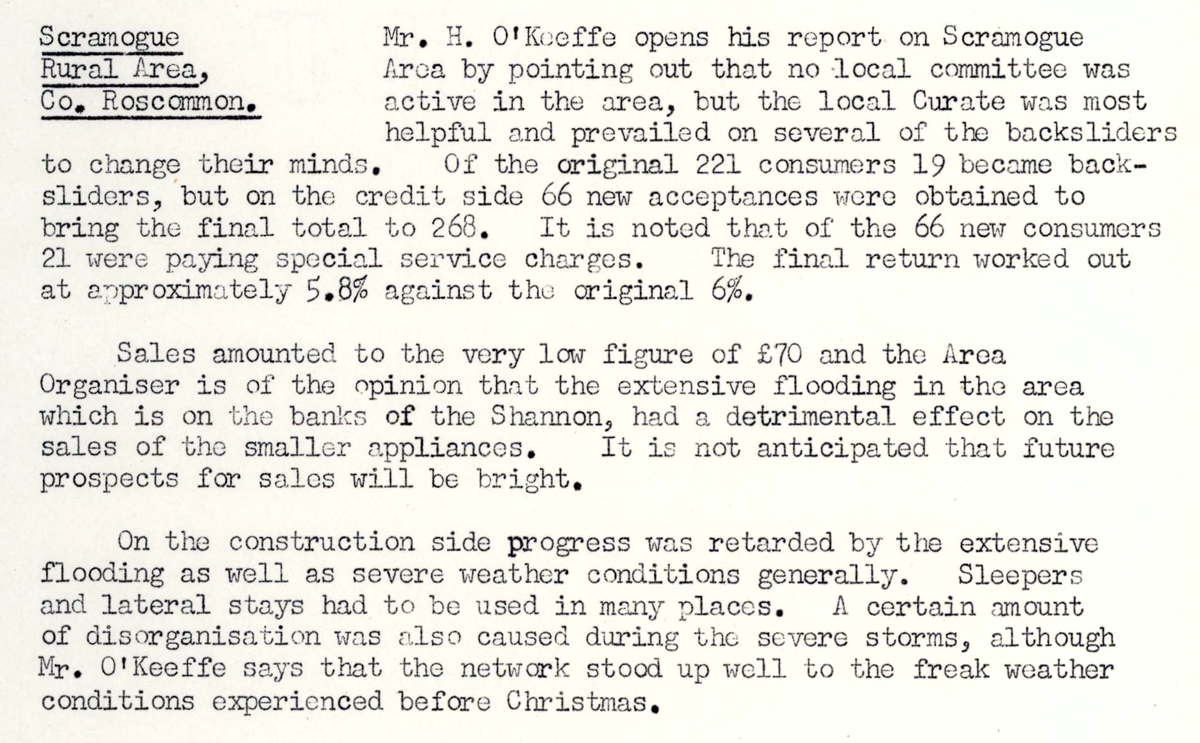 This digital scan from the REO News displays the following text:
"The contractors sold a considerable number of kettles and irons and approximately 35 cookers. Approximately 30 premises had outside lights installed and many more are scheduled for installation when the contractors have completed the first rush of wiring.
It is interesting to note, and perhaps might be taken as a headline, that the early switch‑in of the villages of Schull and Ballydehob had an excellent reaction on the more outlying areas and could not be denuded of all credit for the extra consumers eventually connected.
There was an amusing revival of an ancient rivalry between the two villages. Ballydehob, looking with pride at their 100 kVA transformer, were inclined to be scornful of Schull where a 50 kVA transformer was erected; but the Schull people not to be out‑done, countered by pointing out that there were many more poles in their “Town” than in Ballydehob “Village”.
Only 8 houses remained to be wired when the gang left the area, 3 of these were parochial property and 4 were under the control of the Board of Works.
All County Council cottages were wired during the construction period. In this region the tenant wires his own cottage and is refunded half the cost up to a maximum of £5. From the results, Mr. O’Driscoll recommends the system.
Finally, it is anticipated that post‑development will not meet with marked success as most of the remaining premises in the area are not within easy reach of the existing networks."