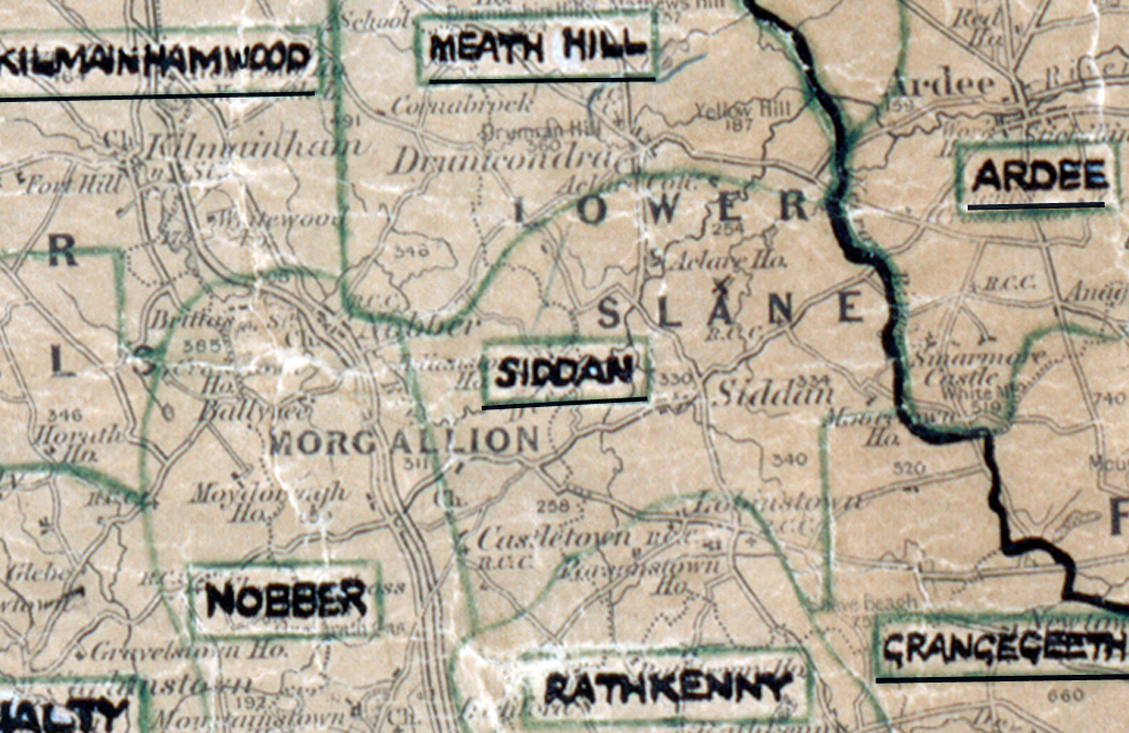
 Area: Siddan
Started: August 1954
Finished: May 1955
Poles used: 820
Line used (km): 76
Premises connected: 205
The figures above were sourced from our REO News magazine, to learn more about what these figures mean, visit our interactive map. The map above shows the area boundary and is from a digitised version of the original map used during the scheme.
Siddan was particularly hilly according to The REO News from July 1955.
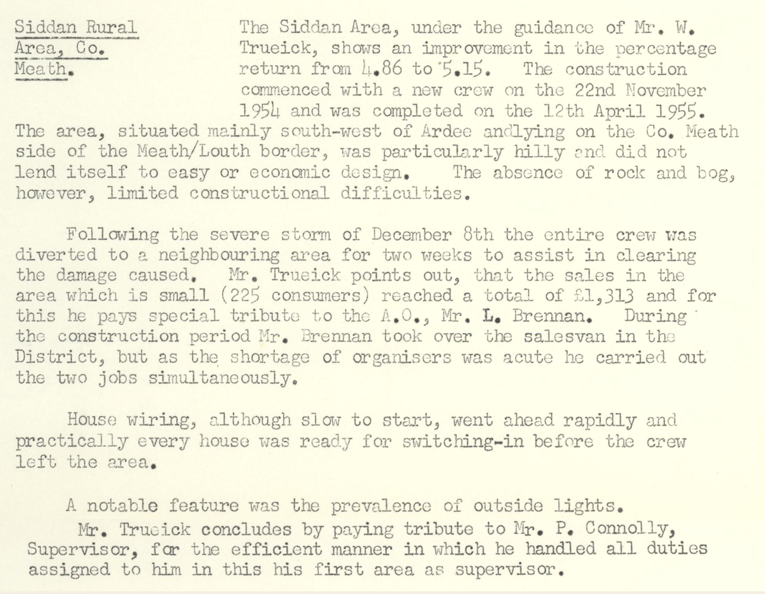
This digital scan from the REO News displays the following text:
"Siddan Rural Area, Co. Meath: The Siddan Area, under the guidance of Mr. W. Trueick, shows an improvement in the percentage return from 4.86 to 5.15. The construction commenced with a new crew on the 22nd November 1954 and was completed on the 12th April 1955. The area, situated mainly south‑west of Ardee and lying on the Co. Meath side of the Meath/Louth border, was particularly hilly and did not lend itself to easy or economic design. The absence of rock and bog, however, limited constructional difficulties.
Following the severe storm of December 8th the entire crew was diverted to a neighbouring area for two weeks to assist in clearing the damage caused. Mr. Trueick points out that the sales in the area which is small (225 consumers) reached a total of £1,313 and for this he pays special tribute to the A.O., Mr. L. Brennan. During the construction period Mr. Brennan took over the salesman in the District, but as the shortage of organisers was acute he carried out the two jobs simultaneously.
House wiring, although slow to start, went ahead rapidly and practically every house was ready for switching‑in before the crew left the area.
A notable feature was the prevalence of outside lights.
Mr. Trueick concludes by paying tribute to Mr. P. Connolly, Supervisor, for the efficient manner in which he handled all duties assigned to him in this his first area as supervisor."