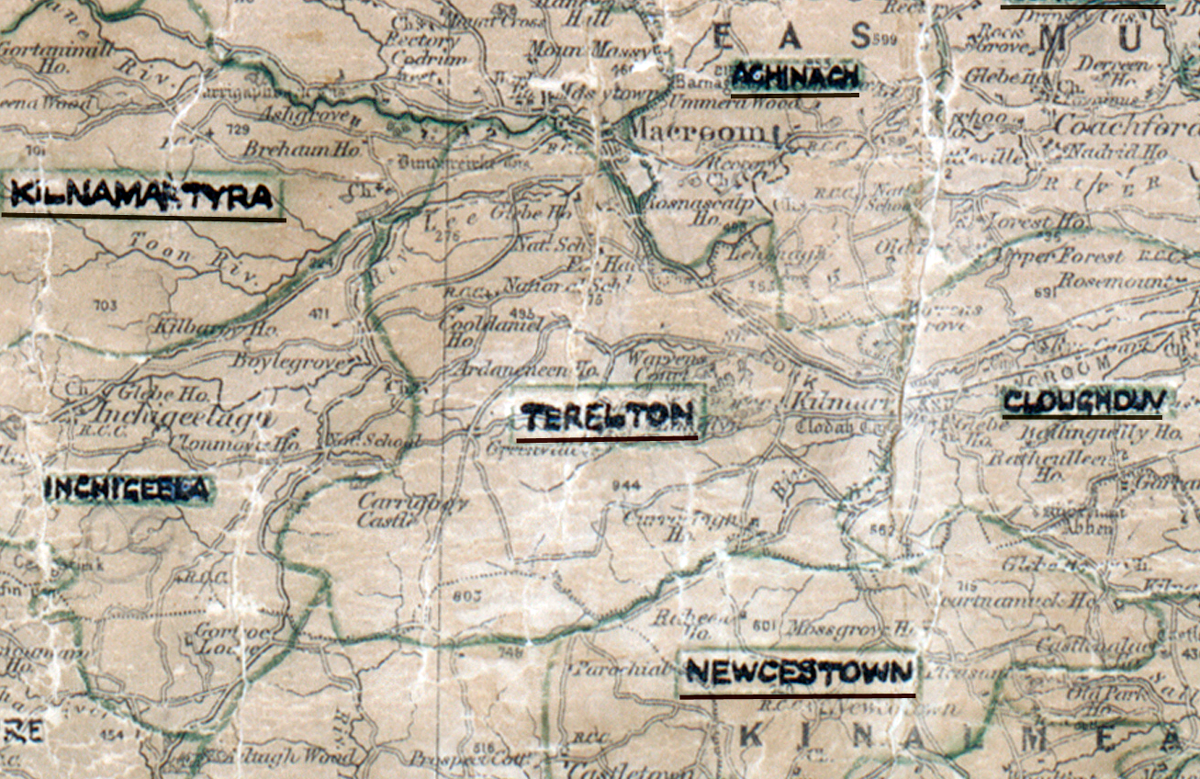
 Area: Terelton
Started: December 1955
Finished: February 1957
Poles used: 1818
Line used (km): 171
Premises connected: 325
The figures above were sourced from our REO News magazine, to learn more about what these figures mean, visit our rural map explanation page. The map above shows the area boundary and is from a digitised version of the original map used during the scheme.
The REO News from June 1957 reports on the novel way that good relations were maintained in Terelton and also on a close encounter of the insect kind.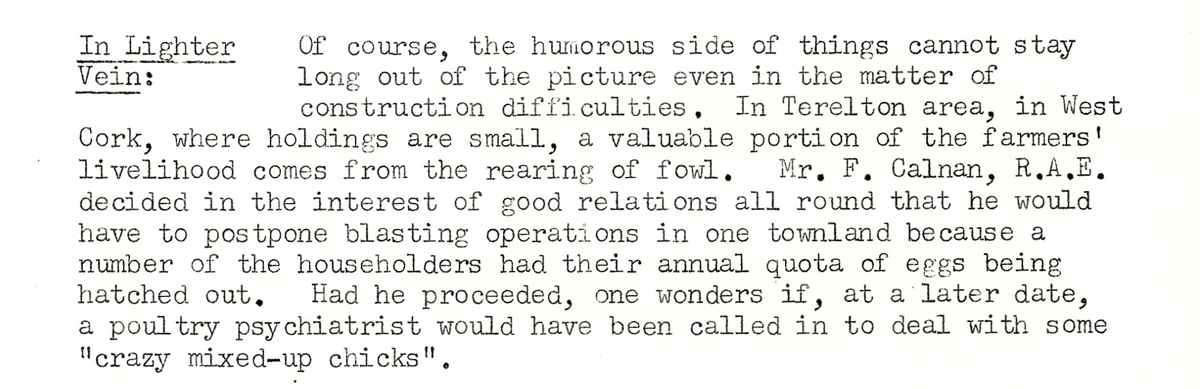
 This digital scan from the REO News displays the following text:
"In Lighter Vein: Of course, the humorous side of things cannot stay long out of the picture even in the matter of construction difficulties. In Terelton area, in West Cork, where holdings are small, a valuable portion of the farmers’ livelihood comes from the rearing of fowl. Mr. F. Calnan, R.A.E. decided in the interest of good relations all round that he would have to postpone blasting operations in one townland because a number of the householders had their annual quota of eggs being hatched out. Had he proceeded, one wonders if, at a later date, a poultry psychiatrist would have been called in to deal with some “crazy mixed‑up chicks”.
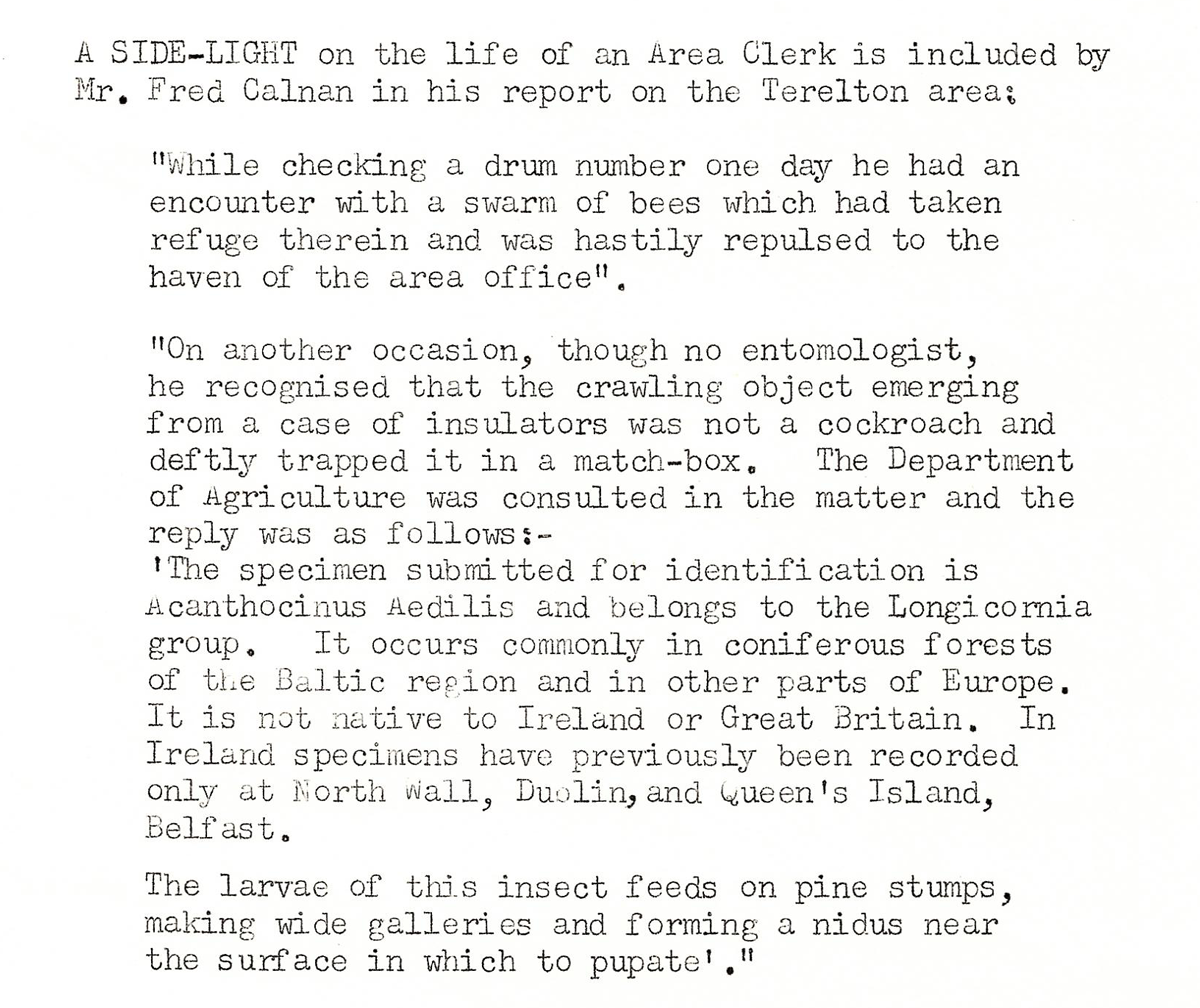
This digital scan from the REO News displays the following text:
"A SIDE‑LIGHT on the life of an Area Clerk is included by Mr. Fred Calnan in his report on the Terelton area:
“While checking a drum number one day he had an encounter with a swarm of bees which had taken refuge therein and was hastily repulsed to the haven of the area office”.
“On another occasion, though no entomologist, he recognised that the crawling object emerging from a case of insulators was not a cockroach and deftly trapped it in a match‑box. The Department of Agriculture was consulted in the matter and the reply was as follows:—
‘The specimen submitted for identification is Acanthocinus Aedilis and belongs to the Longicornia group. It occurs commonly in coniferous forests of the Baltic region and in other parts of Europe. It is not native to Ireland or Great Britain. In Ireland specimens have previously been recorded only at North Wall, Dublin, and Queen’s Island, Belfast.
The larvae of this insect feeds on pine stumps, making wide galleries and forming a nidus near the surface in which to pupate."