Key facts
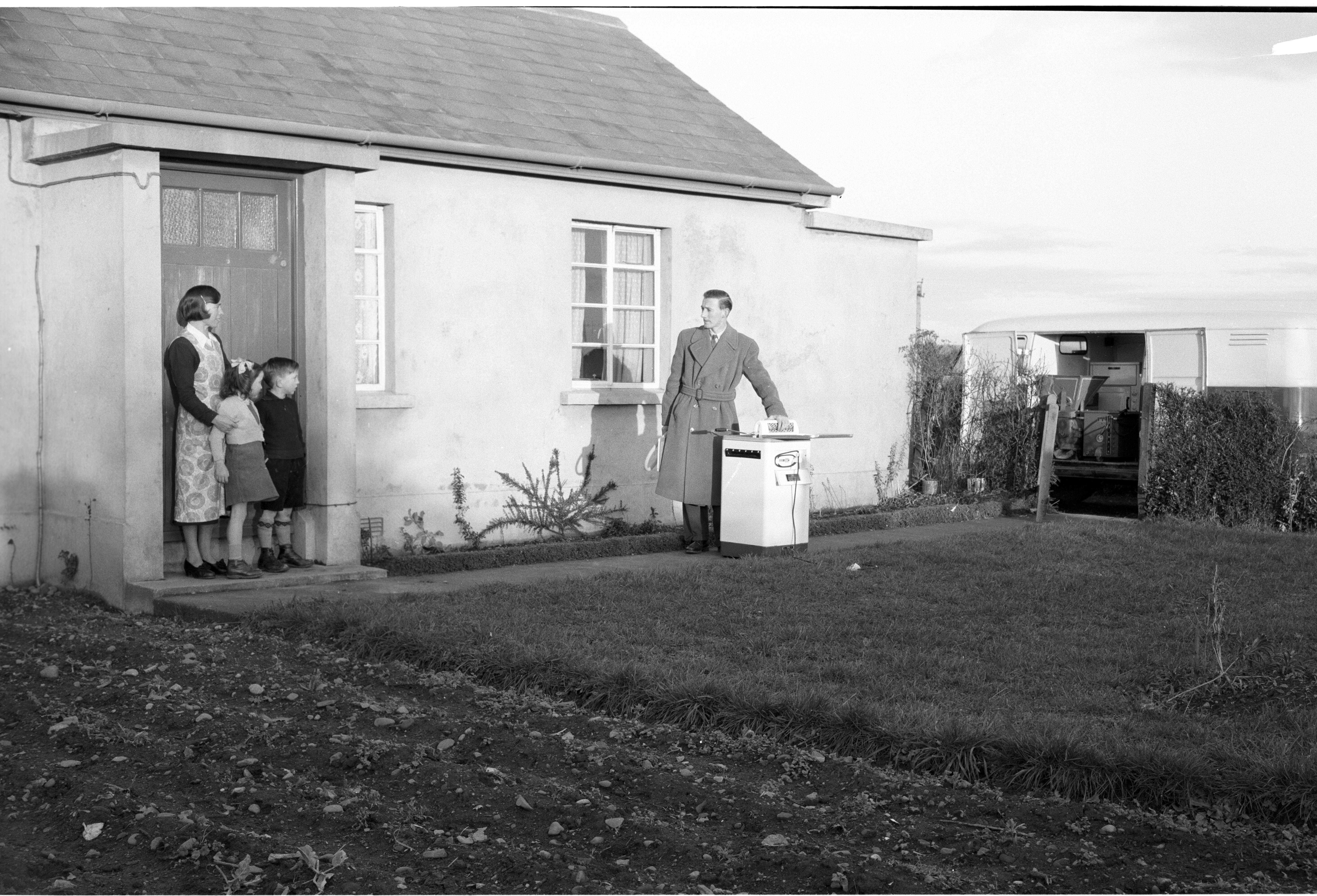
Rural Electrification First Phase: 1946-1964
The first phase of the Rural Electrification Scheme was implemented between 1946 and 1964, but the scheme itself continued until the late 1970s. The sheer scale of the rural electrification project can be gauged from early estimates of the materials needed for its completion, namely: 1 million poles; 100,000 transformers; and 75,000 miles of line.
For a more detailed information relating to the roll out of the scheme, check out our summary of the process, or our more detailed explanation of its implementation.
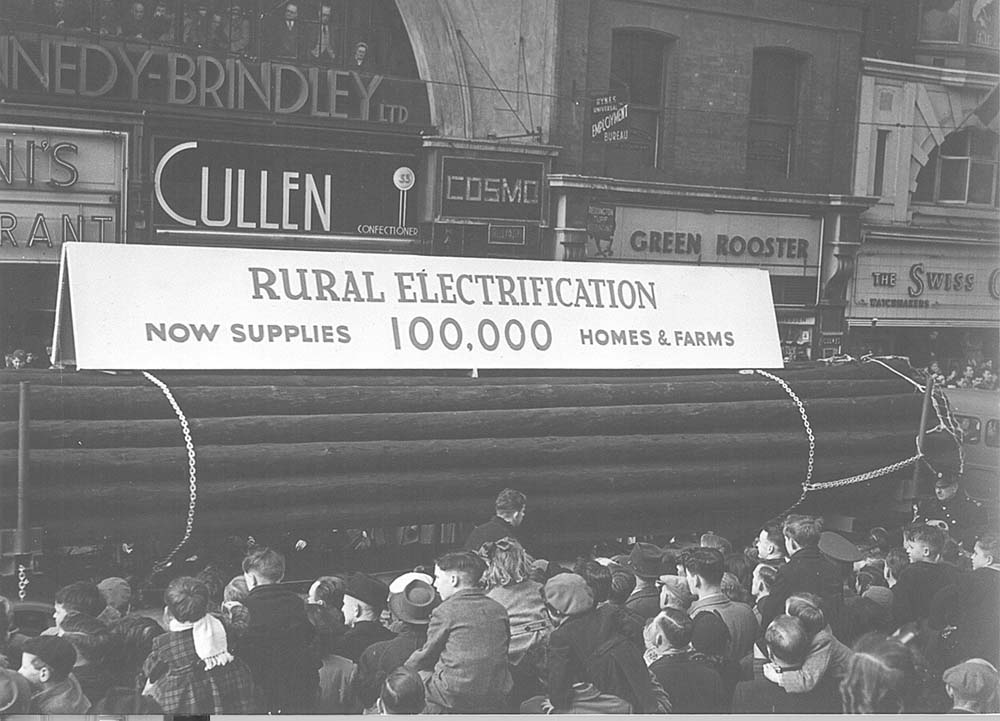
In 1946
- 2 our of 3 Irish homes had no electricity, that’s 400,000 rural homes.
- To roll out the scheme, Ireland was divided into 792 rural areas across 10 districts.
- William Row was appointed as the engineer in charge.
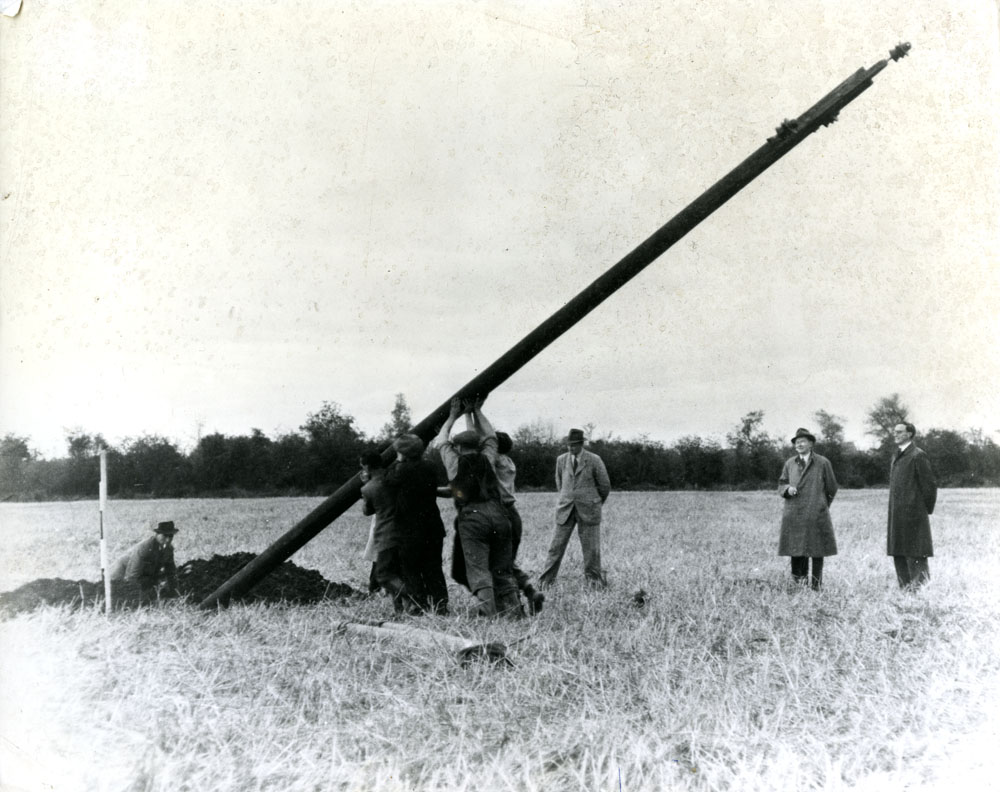
Between 1946 and 1964
- 300,000 homes were connected.
- 50,000 miles of line were strung.
- 1 million poles were erected.
- £36m total cost including a £9.3m government subsidy.
- In 1964 the scheme ended, but post-development plans and extensions ran into the late 1970s.
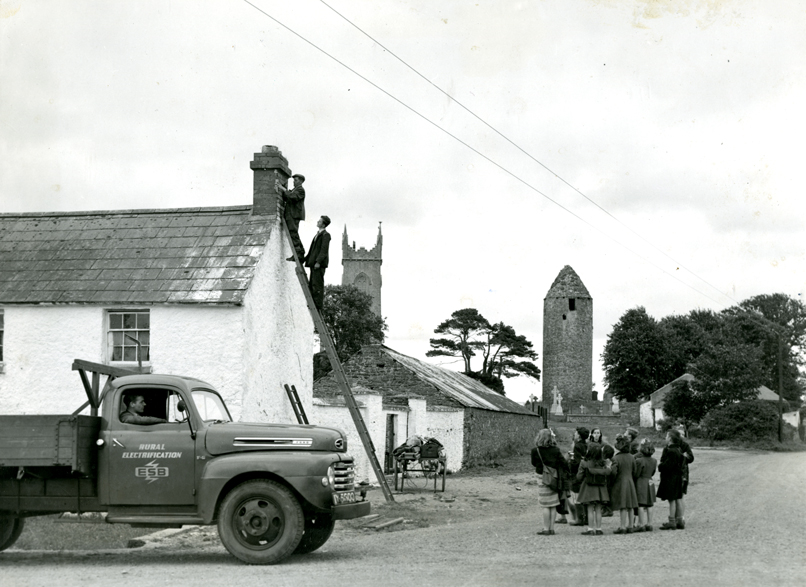
By 1975
- Rural Ireland was 99% connected.
- The final cost of rural electrification came to £140m.